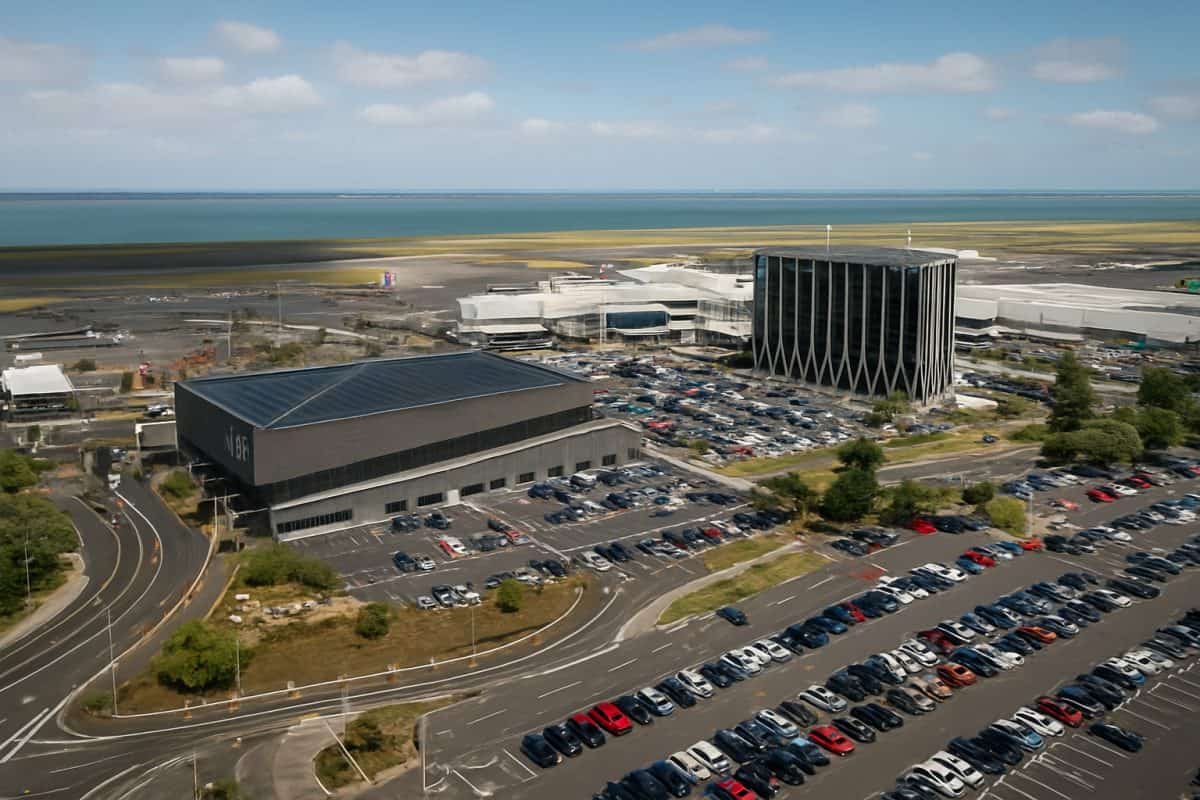
Airport Valet Parking
Auckland Airport valet parking costs roughly twice what covered self-park charges, and the service has barely changed in a decade. For most travellers, that premium buys you about ten minutes of convenience. But there are times — a 5am international departure with three suitcases, an elderly parent who cannot walk the distance from the outdoor lots, a flight you are genuinely about to miss — when handing someone your keys and walking straight to check-in is the only move that makes sense. Here is how the service actually works, what it costs right now, and how to decide whether it is worth it for your trip.
How Valet Parking Actually Works at Auckland Airport
The Handoff Process
You drive to the designated valet zone outside the terminal — signposted from the main airport approach road, usually near the departure drop-off area. A valet attendant meets you at the car, checks your booking reference, and does a quick walk-around inspection of the vehicle with you. This is your chance to note any existing scratches or dings on the condition report. Do it properly. Take your own photos as well.
You hand over the keys, collect your luggage from the boot, and walk straight into the terminal. The entire handoff takes about five minutes from the time you pull up. The attendant then drives your car to a secure parking facility — typically the same covered parking buildings or a dedicated section of the airport’s parking infrastructure. Your car is parked under cover for the duration of your trip.
The condition report is the most important part of this process, and it is the part most travellers rush through because they are focused on their flight. Slow down. Walk around the car with the attendant. Point out anything you want noted. If there is a dispute about damage when you return, the condition report is the document that settles it — and if you signed off on a blank-looking form without checking, you have limited recourse.
Getting Your Car Back
When you land, you notify the valet service — either by calling the number on your booking confirmation, sending a text, or using the operator’s app if they have one. The standard instruction is to call when you are at the baggage carousel, which gives the attendant time to retrieve your car and bring it to the pickup zone by the time you walk out with your bags.
In practice, the wait time after you exit the terminal is 10 to 20 minutes. If your flight lands at a busy time — Sunday evening international arrivals, for example — it can stretch to 30 minutes. The attendant will meet you at the same valet zone where you dropped off, or at a nearby designated pickup point.
When you get the car back, check it before you drive away. Compare the condition to your photos from the drop-off. Check the odometer if you are the suspicious type — the car should not have been driven more than a few kilometres from the terminal to the parking facility and back. Check the fuel gauge. Check that your belongings are where you left them. Any issues need to be raised immediately, at the point of collection. Once you drive off the airport grounds, proving that damage occurred during the valet period becomes significantly harder.
Who Actually Operates the Service
Auckland Airport’s official valet service is operated through the airport’s own parking division — you book it through the Auckland Airport website alongside the self-park options. It is branded as part of the airport’s premium parking tier, and the cars are stored in the same covered facilities as the self-park buildings.
There are also third-party valet operators that work in the airport precinct, though the landscape has thinned over the years. Some off-site parking companies offer a valet-style service where they meet you near the terminal, but these are technically meet-and-greet services rather than true valet — the distinction being that they drive your car to an off-site facility rather than the airport’s own buildings. The security and insurance arrangements may differ.
If you book through the airport’s official channel, you get the airport’s own terms and conditions, their insurance framework, and their complaints process. If you book through a third party, you are subject to that company’s policies, which may offer less recourse if something goes wrong. For most travellers, the official service is the simpler and safer option, even if a third-party operator quotes a marginally lower price.
What It Costs and Whether the Maths Works
Current Pricing
Auckland Airport’s valet parking currently runs at roughly $49-65 per day, depending on the terminal, the time of year, and whether you pre-booked. That compares to $19-35 per day for covered self-park and $12-16 per day for outdoor long-stay lots. The valet premium is substantial — roughly double the covered building and three to four times the outdoor lot.
For a three-day domestic trip, you are looking at around $150-195 for valet versus $60-100 for covered self-park. For a week-long international trip, valet runs $340-455 compared to $135-245 in the covered building. The gap widens with every additional day.
Pre-booking helps — the airport’s website offers discounts for advance bookings, and the earlier you book, the better the rate. But even with the best pre-booked price, valet is still the most expensive parking option at the airport by a significant margin. The service has not fundamentally changed in years, and the pricing reflects a captive audience rather than a competitive market.
The honest comparison is not valet versus self-park — it is valet versus a taxi both ways. A return Uber or taxi from most Auckland suburbs to the airport costs $50-80 total. That is less than a single day of valet parking. Unless you live an hour from the airport or need the car immediately on return, the taxi option beats valet on pure cost every time.
When Valet Is Worth Every Dollar
There are situations where valet parking justifies its cost, and being honest about which ones apply to you saves both money and rationalisation.
The 5am international departure. You are awake at 3am, the house is chaos, you have three checked bags and a toddler. Navigating a multi-level parking building at 4am, finding a bay, walking to the terminal with all your gear — that is genuinely miserable. Pulling up, handing someone the keys, and walking straight to check-in is worth the premium when your brain is running on four hours of sleep.
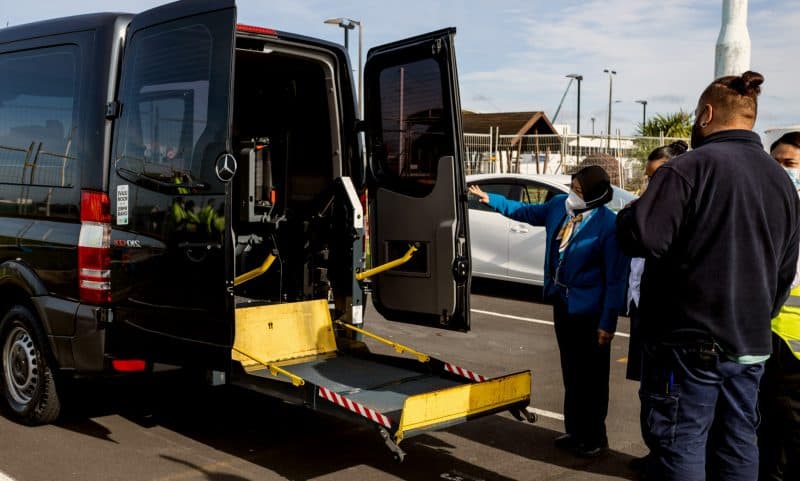
Travelling with elderly or mobility-impaired passengers. The walk from the far end of a parking building to the terminal is long enough to be a real problem for someone with limited mobility. Valet eliminates it. The car stops at the terminal entrance, and the passenger walks the shortest possible distance to the door.
You are genuinely about to miss your flight. Not “running a bit late” but actually at risk of missing check-in. Valet is the fastest way to get from your car to the terminal, and in that moment, $50 is irrelevant.
Corporate or business travel with a tight schedule. If your employer is paying and your time has a dollar value measured in hundreds per hour, the 20 minutes saved by valet over self-park is a rational trade. This is the scenario where valet was designed to be used, and it works exactly as intended.
For everything else — a Saturday morning flight with plenty of time, a solo traveller with one carry-on, a trip where you are already at the airport an hour early — self-park is the smarter call.
The Drop-Off Alternative
Free Drop-Off Zones and Their Limits
Both terminals at Auckland Airport have free drop-off zones directly outside the departure doors. You pull up, the passenger gets out with their luggage, and you drive away. No parking, no payment, no barrier. The time limit is strict — typically five minutes — and it is enforced by marshals who will move you along if you linger.
The free drop-off works perfectly for the solo traveller with one bag and functional legs. It falls apart quickly in other scenarios. A family of five extracting suitcases, car seats, and strollers from a loaded SUV is not a five-minute operation. An elderly passenger who needs a wheelchair from the terminal assistance desk cannot be dropped at the kerb and wished well. A nervous flyer who wants company to the check-in counter needs someone to park and come inside.
The drop-off zones are also the most congested areas at the airport during peak travel periods. Christmas holidays, school breaks, and Friday evening domestic departures turn the drop-off lane into a slow-moving queue of vehicles, all trying to squeeze into the same 50-metre kerb space. If your flight is during peak season, allow extra time for the drop-off itself.
The pick-up equivalent is different — there is no free equivalent for arrivals. The free option is to have the arriving passenger walk to the pick-up area outside the car park building and wait while you do a loop. In practice, this means circling the airport approach road until they text you that they are outside, which is inefficient but free.
Express Pick-Up Parking
If you are picking someone up and want to avoid the circling-the-airport routine, Auckland Airport offers express pick-up parking near both terminals. These are short-stay zones designed for pickups — you pay for the time you use, typically in 15-minute increments, and the rates are steep by normal parking standards but cheap relative to the hassle of airport circling.
The first 15 minutes costs around $8-10, with each additional 15-minute block adding a similar amount. In practice, a well-timed pickup — arriving when the passenger has already collected bags and is walking out — costs one block. A poorly timed one — arriving before the flight has landed and waiting through baggage claim — can cost three or four blocks and feel like a bad deal.
The express zones are positioned close to the terminal exits, so the arriving passenger has a short walk to your car. Compare this to the free option, which involves them walking to a more distant pickup point while you navigate the approach road.
The smart approach for pickups: use the free cell phone lot (when available) or park briefly at a nearby location and monitor the flight status on your phone. Time your arrival at the express zone to coincide with the passenger clearing customs or baggage claim. A well-timed express pickup costs under $10 and takes five minutes. That is a reasonable trade for avoiding the stress of circling or the guilt of making someone stand at the kerb with their suitcase.
Tips From Someone Who Has Done This Too Many Times
Booking and Timing
Book valet parking as soon as you book your flights. The pre-booked rate is consistently cheaper than the walk-up rate, and during peak travel periods — school holidays, Christmas, Easter — valet slots can sell out entirely. The airport’s website lets you book parking at the same time as you check other travel details, so there is no reason to leave it until the week before.
Arrive at the valet zone at least 10 minutes before you would normally arrive at the terminal. The handoff is quick, but if there is a queue of other valet customers ahead of you, or if the attendant is momentarily busy with another vehicle, you do not want that delay eating into your check-in time. For international flights, where check-in closes 60 minutes before departure, this buffer matters.
If you are flying domestic and your airline offers online check-in with no checked bags, valet is arguably overkill — you can be through security in 15 minutes regardless of where you park. The valet advantage is strongest when you have checked luggage, multiple passengers, or a tight timeline.
Keep your booking confirmation accessible — on your phone, not buried in an email thread. The attendant needs your reference number, and fumbling through your inbox while blocking the valet lane is not a great start to a trip.
Protecting Yourself
Photograph your car before the handoff. Walk around it and take photos of every panel, the wheels, and the interior. Use your phone’s timestamp. This takes 60 seconds and is your best protection against a dispute over damage. The valet operator’s condition report is useful, but your own photographic evidence is better.
Remove valuables. This should be obvious, but people leave sunglasses, loose change, phone chargers, and occasionally laptops in valet cars. The operator’s liability for personal items is typically excluded or capped at a trivial amount in their terms and conditions. Anything you care about goes in your luggage or your pockets, not in the car.
Check your insurance. Most comprehensive car insurance policies cover your vehicle while it is in the care of a parking operator, including valet. But confirm this with your insurer, particularly if you have a high-value vehicle. Some policies have exclusions for vehicles left with third parties, and discovering this after an incident is an unpleasant surprise.
Note the odometer reading. A quick photo of the odometer before handoff gives you a reference point. Your car should not accumulate more than 5-10 kilometres during the valet period — the distance from the terminal to the parking facility and back. Significantly more than that warrants a question.
Do not leave spare keys in the car. The valet needs one set. Keep your spare at home. If you have a keyless entry system that allows the car to be driven with a backup key stored in the glovebox, remove it before the handoff.
Valet parking at Auckland Airport is not a scam and it is not a bargain — it is a specific service that solves a specific problem at a specific price. Most of the time, self-park is the smarter call, and you should be honest with yourself about whether you are paying for convenience or necessity. But for the trips where everything aligns against you — the early flight, the heavy bags, the parent who cannot manage the walk — it earns its premium. Just book ahead, photograph your car, and do not leave your good sunglasses in the glovebox.
2 Comments
Used valet once when I was running late for a flight. The handover at the terminal was seamless but waiting 25 minutes for the car on return was frustrating. If your flight lands during a busy period, factor in delays. Probably would not use it again unless I was really pressed for time.
Honestly the maths does not work for me. Getting a mate to drop you off is free and takes 20 minutes. Valet is convenient but it is a lot of money for what you get.