Covered Auckland Airport Parking
Auckland’s weather will do more damage to your parked car in a week than most airport thieves would bother with. Sun, salt air, and the occasional hailstorm are the real threats at Auckland Airport’s parking lots, and covered parking is the straightforward fix — if you are willing to pay for it. The question is whether the premium over an open-air bay is worth it for your specific trip.
The Official Airport Parking Buildings
What You’re Paying For
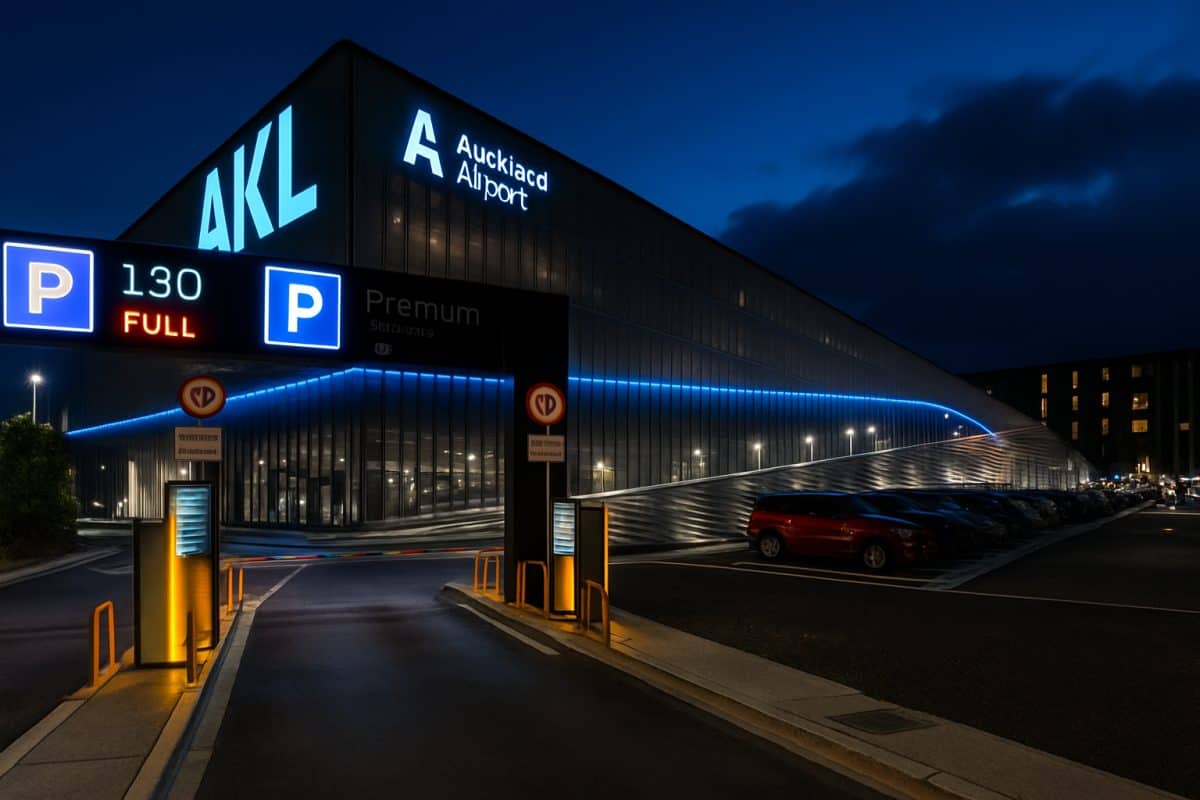
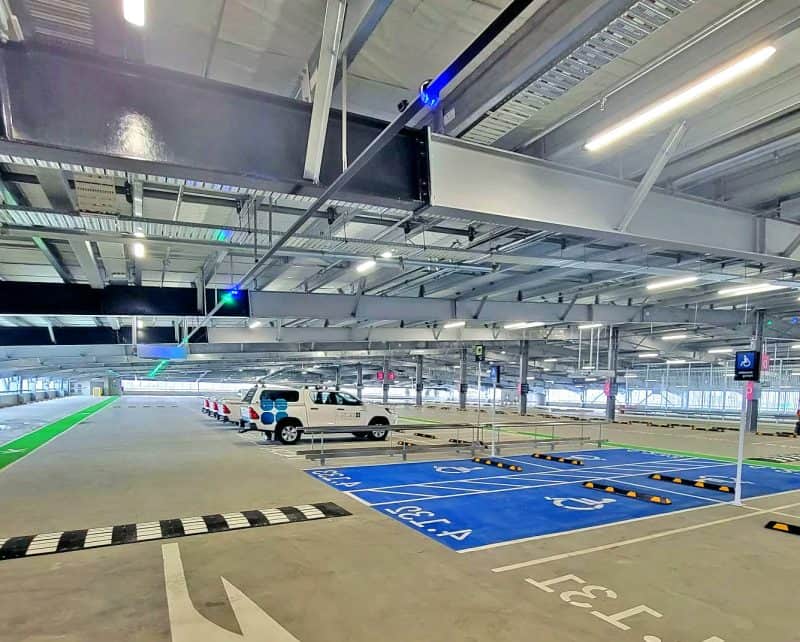
Auckland Airport has two main parking buildings — one serving the domestic terminal and one serving the international terminal. Both are multi-level concrete structures with full roof cover, which means your car stays dry regardless of what Auckland’s weather decides to do while you are in Queenstown or Kuala Lumpur. The domestic building connects directly to the terminal via a covered walkway on Level 2. The international building is a slightly longer walk — about five minutes with luggage — but still covered the entire way.
Inside, the buildings are well-lit, have CCTV on every level, and operate with licence-plate recognition at the barriers. You do not need to keep a paper ticket; the system reads your plate on entry and exit, and you pay at the machines near the pedestrian exits or online before you collect your car. The bays are standard width — tight if you drive anything larger than a Corolla, comfortable enough for a sedan.
What you are actually paying for beyond rain protection is proximity and security. These are the closest parking options to the terminals that do not involve someone else driving your car. The buildings are patrolled, the barriers are controlled, and the CCTV footage is retained. For a weekend trip, the convenience of walking straight from your car to check-in without a shuttle bus is the main draw.
Pricing and How It Stacks Up
Auckland Airport’s covered parking is priced on a tiered system that rewards pre-booking and punishes spontaneity. Walk up on the day and you will pay the standard rate — currently around $29-35 per day depending on which terminal and how far in advance demand has pushed the dynamic pricing. Pre-book online through the Auckland Airport parking page and the same bay drops to roughly $19-26 per day, depending on dates and availability.
For comparison, the outdoor long-stay lots (uncovered, further from the terminal, shuttle bus required) start at around $12-16 per day when pre-booked. So the covered building premium is roughly $7-10 per day over the budget option — or about $50-70 for a week-long trip.
Multi-day rates flatten the per-day cost the longer you stay, but the covered buildings still work out to roughly double the outdoor lots on any trip longer than three days. For a weekend trip (two or three days), the total difference might be $20-30, which most people consider trivial. For a two-week holiday, the covered building could cost $350+ while the outdoor lot is $180. That gap is harder to ignore.
The sweet spot for the parking buildings is trips of one to five days where the convenience premium is small relative to the total cost. Beyond that, the numbers start favouring either the outdoor lots or off-site operators.
Security and What They Actually Monitor
The airport parking buildings have CCTV cameras on every level, licence-plate recognition at entry and exit barriers, and security staff who patrol the buildings on a regular loop. The combination means that any vehicle entering or leaving is logged with a timestamp, and the buildings are not accessible to foot traffic without passing through a controlled entry point.
What this does not mean is that your car is guaranteed safe from every conceivable risk. Break-ins are rare in the airport buildings compared to street parking or uncovered lots, but they are not unheard of. The CCTV deters opportunistic theft but will not stop someone who is determined and fast. Do not leave valuables visible in your car — laptops, bags, or anything that looks worth smashing a window for.
The practical security advantage of the covered buildings is really about vehicle condition rather than theft prevention. A car parked under cover for a week will not have bird droppings baked into the paint by the sun, will not collect tree sap if a storm blows debris around, and will not suffer the fine scratches that come from grit and wind in an open lot. For newer cars or anything you care about aesthetically, the cover itself is the security feature that matters most.
Auckland Airport’s terms and conditions make it clear that parking is at the owner’s risk. They do not accept liability for damage or theft. This is standard for every parking operator in the country, but worth noting if you assume that paying premium rates buys you an insurance policy. It does not.
Off-Site Covered Options
The Operators Near the Airport
Several off-site operators in the Mangere and Airport Oaks area offer covered or semi-covered parking at rates below the official airport buildings. The main players are Park & Fly, Best Flights Parking, and Auckland Airport Car Park (not to be confused with the airport’s own operation — the naming is deliberately confusing, and that is not accidental).
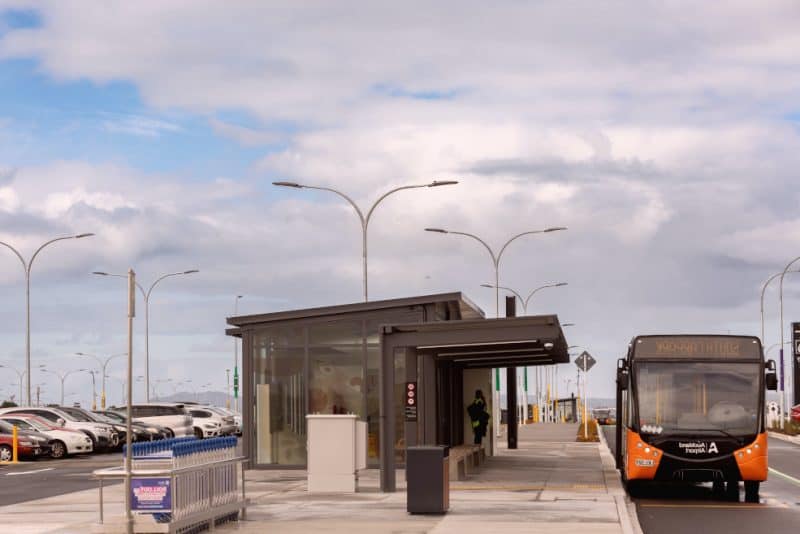
Most off-site operators work on a shuttle model: you drive to their facility, park your car, and a shuttle bus takes you to the terminal. On return, you call or text when you have collected your bags, and the shuttle picks you up from a designated point outside the terminal. The total transfer time is typically 10 to 20 minutes each way, depending on traffic and how quickly the shuttle runs.
The covered options at off-site facilities vary. Some offer fully enclosed buildings comparable to the airport’s own parking structures. Others provide carport-style cover — a roof overhead but open sides, which protects against rain and sun but not driving wind or horizontal hail. A few advertise “covered parking” that turns out to be a fabric shade sail, which is better than nothing but not what most people picture when they book.
Check exactly what “covered” means before you book. Ask whether the cover is a permanent structure or a temporary shelter, whether it covers the entire vehicle or just the roof line, and whether the facility has CCTV and controlled access. The price difference between a fully enclosed bay and a shade-sail spot is often minimal, so it is worth confirming.
Booking and What to Watch For
Most off-site operators allow online pre-booking, and pre-booking is strongly recommended — both for the price reduction and because covered bays are limited and tend to sell out before uncovered ones. Booking through the operator’s own website usually gives you the best rate, though comparison sites like Airport Parking NZ aggregate several operators if you want to compare.
Watch for hidden fees. Some operators quote a base rate that excludes a booking fee, a credit card surcharge, or a “premium vehicle” supplement for cars over a certain size. Read the total at checkout, not just the headline rate. Cancellation policies vary — some offer free cancellation up to 24 hours before arrival, others charge a fee, and a few are non-refundable. If your travel plans are uncertain, the cancellation policy matters more than a $2/day saving.
Read recent reviews, not just the star rating. The quality of off-site parking operators can shift quickly — a change in ownership, a new shuttle driver, or a reduction in shuttle frequency can turn a four-star experience into a frustrating one. Google Reviews and the operator’s social media pages will give you a current picture.
One practical tip: note the operator’s phone number in your phone before you fly. You will need it when you land and want the shuttle, and searching for it while standing outside the terminal with luggage and a flat phone battery is not ideal. Most operators also have a text or app-based pickup request system — set it up before you leave.
Is the Premium Worth It
Weekend Trip vs Week Away vs Extended Travel
The value calculation changes dramatically with trip length, and most people do not think about this until they are staring at the payment screen.
Weekend trip (1-3 days): The covered building is almost always worth it. The total premium over an outdoor lot is $15-30, and you save yourself the shuttle transfer time on both ends. For a quick domestic trip — Wellington for a wedding, Queenstown for a long weekend — walking straight from your car to the terminal and back is worth more than the price difference.
Week away (4-7 days): The calculation gets tighter. You are looking at a $50-70 premium for covered parking over the outdoor lots. That is not nothing, but for a car you care about, the weather protection for a full week has real value. Auckland can deliver sun, rain, and hail in the same seven-day period. If you drive a newer vehicle or something with a paint finish you want to preserve, the covered bay is still a reasonable spend.
Extended travel (8+ days): This is where covered airport parking starts losing the argument. Two weeks in the covered building can run $350 to $500. The outdoor lots will do the same period for $180-250. And at that price point, a taxi or rideshare from home to the airport and back is often cheaper than either option. A return Uber from most Auckland suburbs to the airport costs $50-80 total — less than two days of covered parking.
For trips beyond two weeks, the honest answer is that airport parking in any form is poor value. Leave the car at home, in your garage, and spend the savings on something at your destination.
The Practical Checklist Before You Book
Before you book any airport parking, run through these five questions. They take two minutes and can save you $100+.
How long is the trip? If it is three days or under, book the covered building and stop overthinking it. If it is more than ten days, seriously consider leaving the car at home and taking a taxi.
What is the car worth to you? A ten-year-old Corolla can sit in an outdoor lot for a fortnight and the worst that happens is some bird droppings and dust. A new SUV with $800 of paint protection deserves cover. Match the parking to the vehicle, not to your travel anxiety.
What time is your flight? Early morning departures (before 6am) favour the covered building because the shuttle services from off-site operators may not be running at full frequency. If your flight is mid-morning or afternoon, the shuttle adds minimal inconvenience.
What does the weather forecast say? If your trip coincides with a week of clear skies, the outdoor lot is fine. If a storm system is forecast, covered parking earns its premium in avoided hail damage alone.
Have you compared the total cost to alternatives? Price the covered building, the outdoor lot, an off-site operator, and a return taxi or rideshare. Write the four numbers down. The cheapest option that meets your comfort threshold is the right answer. Do not default to the parking building out of habit when a taxi costs less.
Covered parking at Auckland Airport is a convenience premium, not a luxury. For short trips and newer cars, the cost difference is small enough to be automatic. For longer trips, your own garage and a taxi fare usually make more sense. Either way, the decision takes five minutes and saves you the particular misery of returning to a hail-damaged car after an otherwise perfect holiday.
3 Comments
Parked in the international terminal building for 10 days over Christmas and it was worth every cent. Came back to a clean dry car instead of bird mess and tree sap like last time I used the open lot. The price difference is not that bad if you book online ahead of time.
We used Airparks covered bays for a week-long trip to Fiji. Shuttle was quick and the car was fine when we got back. Saved about $40 compared to the terminal building.
Good comparison. I always just assumed covered was way more expensive but looking at the numbers here it is pretty reasonable for trips longer than a few days.