Shopping Centre Parking Time Limits: Sylvia Park, St Lukes and Botany
Parking at Sylvia Park, St Lukes and Botany is free, and it has been free long enough that most of us stopped thinking about it at all. What changed is that it is now free for a specific number of hours, the number depends on which part of the carpark you happened to drift into, and a camera at the exit is quietly doing the arithmetic. Here is what each centre allows, how the plate readers actually work, and why a few thousand train commuters are the reason any of this exists.
Free Until It Is Not: What Each Centre Actually Allows
Sylvia Park and the Zone You Did Not Notice
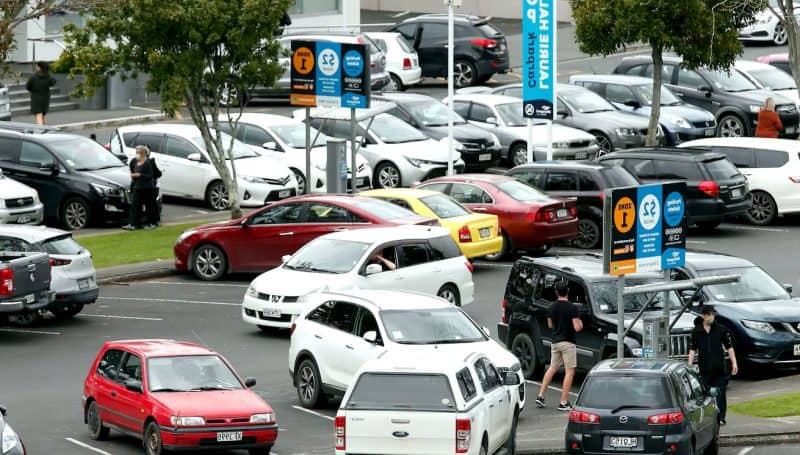
Sylvia Park is the largest retail carpark in the country and it does not run one time limit, it runs several. The limit depends on which zone you rolled into, and the zones are not laid out in a way any driver could work out from behind the wheel.
Bays closest to the main entrances and the supermarket sit on the shortest clocks, because that is where the centre wants turnover. Push further out, or up onto the upper decks, and you generally get longer.
The signs are at the zone entries and the ramp heads, so you pass them at about 15km/h while hunting for a gap. Almost nobody reads them, and that is the whole problem in one sentence.
For a coffee and a haircut the limit is irrelevant. For lunch and then a film it is not, and the difference between those two afternoons is a breach notice a fortnight later.
St Lukes: A Small Site Doing Big Numbers
Westfield St Lukes has the opposite problem. Boxed in by St Lukes Road, Wagener Place and the motorway ramps, it has to move a comparable number of shoppers across a fraction of the land, so the decks are tighter and the limits run shorter on average.
The other thing that catches people there is the neighbourhood. Anyone working in Morningside, heading to New North Road or walking down to Kingsland realises within a week that there is a free deck two minutes away. The centre realised it too.
Treat St Lukes as the least forgiving of the three. It is the site where the gap between what you thought was a quick trip and what the camera recorded is most likely to matter.
Botany: Sprawl With a Bus Station Attached
Botany Town Centre has the space St Lukes does not, which for years made it the one carpark in Auckland where you could leave a car and genuinely forget about it. Acres of flat surface parking, no barrier arms, no ticket machines, no obvious way anyone would ever know.
Then the bus interchange went in next door and the maths changed. A carpark sitting beside a frequent service into the city stops being a shopping centre carpark and becomes free park and ride with a food court attached, and it fills before the shops open.
Botany’s limits are generally the most generous of the three because the site can afford them. The enforcement is still there, and all that open tarmac makes it very easy to talk yourself out of believing it.
How the Cameras Actually Work
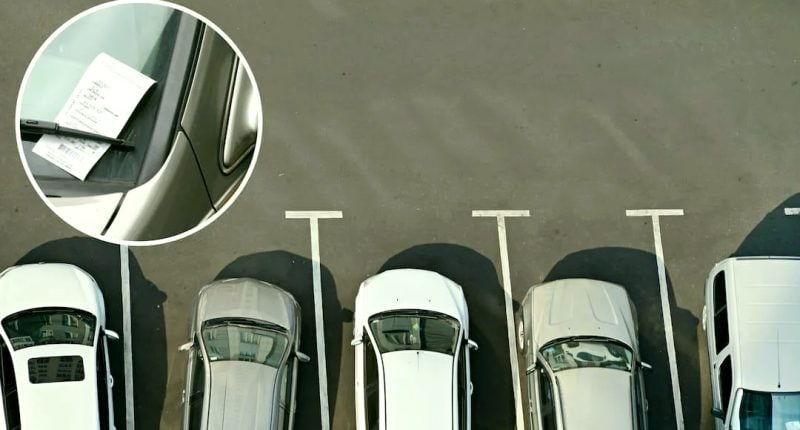
Plate In, Plate Out, Clock Running
There is no warden walking the decks with a chalk stick. What these centres run is automatic number plate recognition – cameras at every vehicle entry and exit that photograph your plate and stamp the time on it. The system then does one piece of arithmetic: exit time minus entry time.
If the answer is larger than the limit for that zone, a notice gets generated and posted to the registered owner. That single subtraction explains most of what feels unfair about mall enforcement.
The camera does not know you spent forty minutes in the pharmacy queue, or that you moved the car from a short-stay bay to a long-stay one halfway through. It knows when you arrived and when you left, and it bills the gap.
What the System Misses
The gaps in plate recognition are real but narrower than the internet believes. Leaving and coming straight back is the big one – most systems treat a full exit and re-entry as two separate visits, which is why a mid-afternoon run to the petrol station really does reset the clock at some sites. It is also why staff at these centres get told to shift their cars.
Past that it thins out fast. Cameras miss plates caked in mud, plates half hidden by a towbar or a bike rack, and plates sitting crooked on a trailer. Motorbikes with no front plate are read leaving but not always arriving.
None of that is a plan, it is a lottery, and deliberately obscuring a plate is a separate offence you do not want near your name. The system catches the people it was built to catch, which is anyone parked all day.
Why the Notice Is Not a Council Fine
It is worth being clear about what actually lands in the letterbox. These are private carparks, so the Auckland Transport Traffic Bylaw 2015 stops at the property boundary and no council infringement can be issued in there at all.
What arrives instead is a breach notice from the centre or its parking contractor, arguing you accepted the terms on the sign when you drove in and then broke them. That is a contractual claim rather than a fine, the enforcement path behind it looks nothing like an AT ticket, and the mechanics of arguing one are covered separately.
The bit to carry forward is simply that it is not a ticket, and treating it like one is the first mistake most people make.
The Commuters Who Caused This
Park and Ride Without the Park and Ride
None of this exists because someone lingered over a second flat white. It exists because Auckland’s park and ride capacity has never come close to demand, and shopping centres have an unfortunate habit of sitting next to trains and buses.
Sylvia Park station is a short walk from the mall doors, on the line straight into Britomart. Botany’s interchange is right on the doorstep. Both carparks filled with cars belonging to people who were never going to set foot in a shop, arriving at seven and leaving at six.
That is hundreds of bays gone before trading starts, on land that cost a fortune and exists to move customers through doors. Every mall in the country with a transport link next door has reached the same conclusion, and the cameras are what that conclusion looks like.
What Changed for Everyone Else
The awkward part is that the fix cannot tell a commuter from a customer having a long day. The camera has no way of separating someone catching the 7:12 into town from someone with a specialist appointment upstairs, then a click and collect, then a coffee with their sister.
So the limits came in for everybody, and the people most likely to trip them are not the commuters. The commuters read the rules inside a fortnight and adjusted. It is the occasional shopper who gets caught, because for twenty years a mall carpark was a place with no clock in it.
That is the shift worth taking on board. Free parking at these centres has not stopped being free. It has stopped being unconditional.
Staying Under the Limit Without Watching the Clock
Work Out Your Zone Before You Lock the Car
One habit prevents nearly all of this: read the sign at the ramp head or the zone entry, not the one at the road boundary. Boundary signs give you the general terms. Zone signs give you the number that applies to the bay you are actually standing in, and at all three centres those numbers vary across the site.
Then make an honest estimate of how long you will be. Not the optimistic one – the honest one, including the part where you decide to look at something on the way out.
If the estimate lands anywhere near the limit, park somewhere with a longer clock instead. That usually means further from the entrance or a level higher up the deck. It costs you three minutes of walking and removes the problem completely.
Movies, Appointments and the December Problem
Some visits were always going to run long, and the centres know it. Cinemas, medical suites and gyms inside these developments generally sit in longer-limit zones or have some form of validation, because a business that needs you on site for three hours cannot function in a two-hour bay.
The catch is that validation is rarely automatic and almost never advertised anywhere you would think to look. If you are booked into a late session or seeing someone upstairs, ask at the counter whether parking is covered and what you have to do about it. Sometimes it is a plate typed into a kiosk, sometimes nothing at all because you were already in the right zone.
December deserves its own warning. Extended trading hours do not extend the parking limits, and the worst day to learn that is the one where you spent four hours doing the Christmas run in a short-stay bay.
If a Notice Turns Up Anyway
Do not ignore it, and do not pay it on reflex either. Both are decisions people make in the first ten seconds and regret later.
Read what the notice says, then check it against your own day:
– The entry and exit timestamps, because those two numbers are the entire basis of the claim and they are not always right
– Which zone you were parked in, and what the sign at that zone said
– Whether you left and re-entered, which some systems record as two visits
– The plate in the photograph, since misreads do happen
If you can, go back and photograph the sign you parked under. Sign wording is the operator’s own evidence and it cuts both ways.
Where the times and the zone genuinely stack up against you, you are in a contractual argument rather than a legal one. Community Law will talk it through with you at no cost if you are not sure where you stand.
The malls did not install cameras because shoppers were taking liberties. They installed them because Auckland never built enough park and ride, and the carparks next to the stations filled up with cars that were never coming inside. The rest of us inherited the clock, and thirty seconds spent reading the sign at the ramp head is the whole of the defence.
3 Comments
The bit about exiting and coming back resetting the visit is spot on at Botany, I’ve done it by accident more times than I can count. Drove out for petrol on Ti Rakau, came back in twenty minutes later, never heard a thing. Never once occurred to me that was the reason.
Good write up, though I’d rank St Lukes even riskier than you have. Got a notice there in July after an appointment ran over, and the zone sign was on a pole facing the other way so you’d only ever see it coming up the opposite ramp. Went back and photographed it like you suggest and it did at least give me something to point at. Paid it in the end but I knew what I was arguing about, which is more than I could say the first time.
Does the cinema validation actually work at Sylvia Park? Asked at the counter last time and the poor kid had no idea what I was on about.