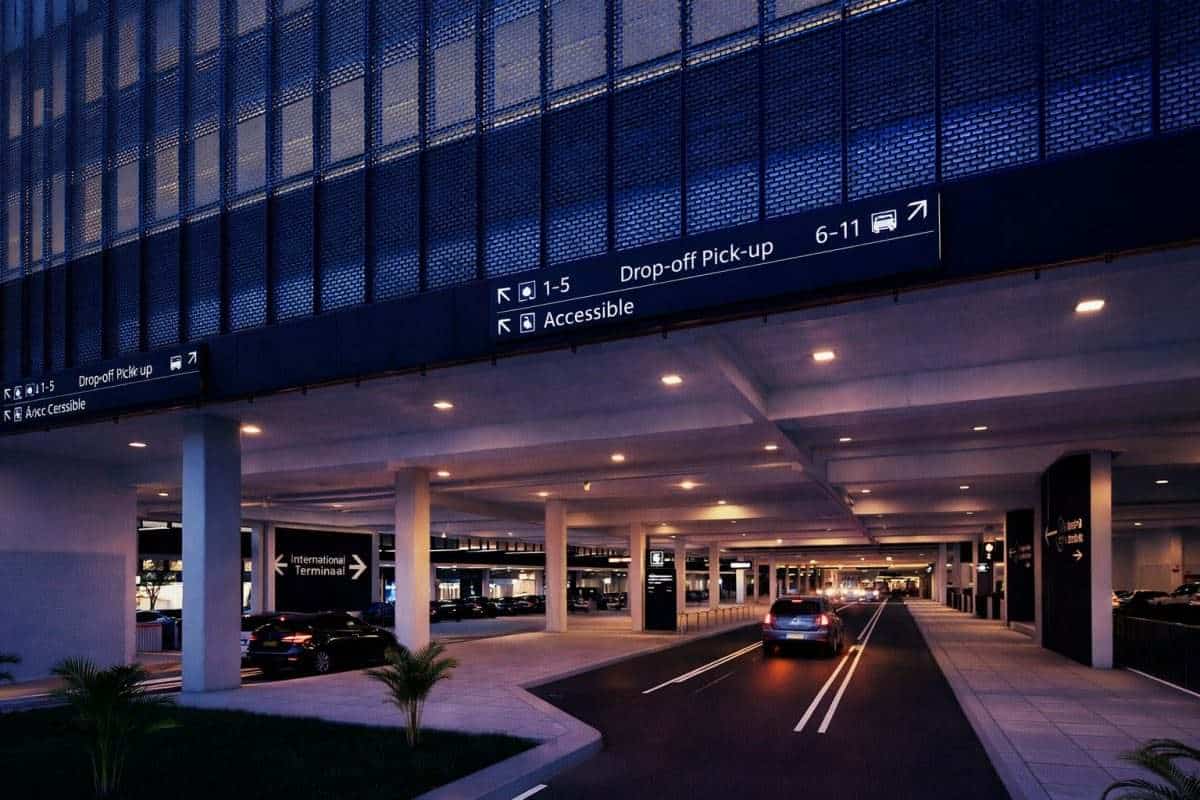
Auckland Airport Pick-Up and Drop-Off: The Free Waiting Area and What the Kerb Costs
The kerb outside Auckland Airport used to be free, and nobody tells you it isn’t any more until the boom gate is in front of you. There is a free waiting area a couple of minutes back down the road that almost nobody uses, because the signage pointing to it is much quieter than the signage pointing at the paid lanes. Here is how to time the loop so you only drive it once.
The Kerb Is Not Free Any More
What Changed at the Terminal Doors
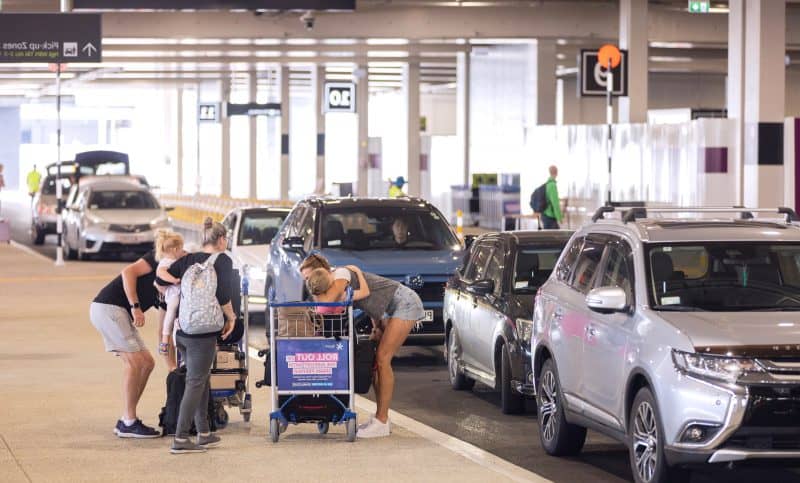
For years the deal at Auckland Airport was simple enough. Pull up outside, pop the boot, hug, go. Nobody timed you unless you parked up and wandered inside. That ended when boom gates and plate cameras went onto the express lanes at both terminals, and the free kerb stop quietly became a paid transaction.
The official line is congestion, and as far as it goes it is fair. Those lanes were a genuine mess on a Friday evening, clogged with cars waiting twenty minutes for a delayed flight.
It is also a revenue line on private land, and the airport company is not especially shy about that. It owns the road, the kerb and the camera. What you get for your money is a lane that actually moves. What you lose is the old assumption that dropping your mum at departures was a free act.
What You Pay at Domestic and International
Both terminals run the same idea with slightly different numbers, and both are tiered rather than metered. The first band buys you a short window – call it ten minutes – for a few dollars. Overstay it and you do not pay a small increment. You jump to the next band, which is a multiple of the first rather than an addition to it.
The real trap is when the clock starts. It starts at the boom gate, not when you stop at the kerb. If the lane is backed up and it takes four minutes to crawl to door three, you have burned most of your first band before anyone has opened a car door.
Rates have moved more than once since the lanes opened, so treat any figure you read online, mine included, as indicative and check the current published charges before you leave home. The board at the entry is the only price that binds you, and by then you have already chosen the lane.
The Free Waiting Area Nobody Points You To
Where It Actually Is
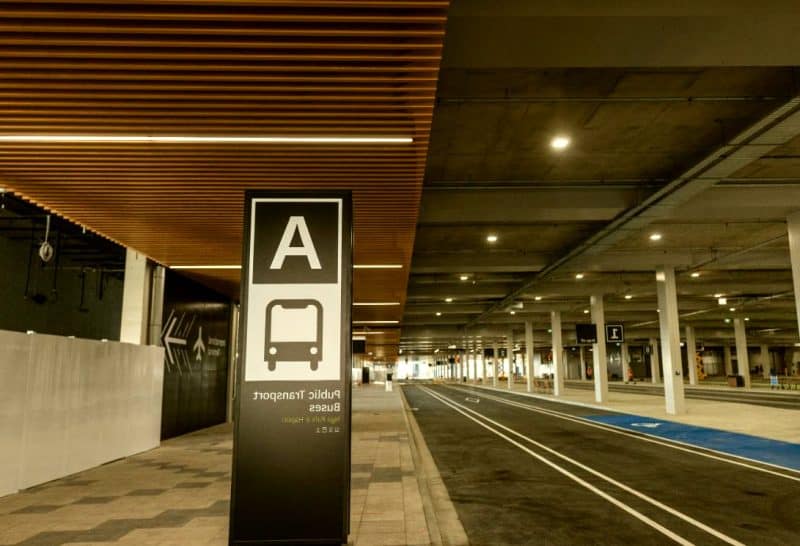
The free waiting area sits a couple of minutes back from the terminals, signposted off Verissimo Drive on the approach into the airport precinct. It is a plain sealed car park – marked bays, lighting, cameras reading plates at the entry, no building, no coffee, nothing to look at but the runway lights. That is the entire offer, and for the job it does it is enough.
From there you are roughly three minutes from the domestic doors and four or five from international, depending on how the roundabouts are behaving. That gap is the whole trick. Close enough to be at the kerb before your passenger has finished walking out, far enough that you are not paying for the privilege of idling.
Most Auckland drivers I know have driven past that turn-off a hundred times without registering it exists.
How Long You Get, and What Overstaying Costs
The free window is generous by airport standards – long enough to absorb a baggage delay, not long enough to park up for the afternoon. An hour is the number to plan around, and the cameras start counting the moment you enter, whether or not you noticed the sign.
Overstay and you are not fined the way a warden on Queen Street would fine you. There is no infringement notice, no fourteen days to pay, no waiver request form.
That distinction matters more than most people realise. Airport land is private, so Auckland Transport’s parking bylaw and its dispute process do not reach it. The barrier converts you to a paid rate and wants settling on the way out, and if you think that is wrong your argument is with the airport company, not the council. It is a contract, not an offence.
Why the Signage Does Not Help
Drive in from the motorway some time and count the signs. The express lanes get big, early, well-lit guidance repeated over several hundred metres. The waiting area gets one modest sign, late, at exactly the point where you are already committing to a lane at speed with a plane on your mind.
None of the approach signage carries a price either. You discover what the kerb costs at the boom gate, after the decision is made – backwards from every commercial car park in the city, where a Wilson building tells you the tariff before you turn in.
I am not going to claim that is deliberate. It does not need to be deliberate to be convenient.
Timing the Loop So You Only Do It Once
Wait for Wheels Down, Not the Scheduled Time
Here is the habit that saves the most money, and it costs nothing to build. Do not leave home, and do not leave the waiting area, on the strength of a scheduled arrival time. Watch the actual aircraft.
Flight tracking is free and accurate to the minute, and wheels down is the only event with a stable relationship to your passenger appearing at the doors. From touchdown, a domestic arrival with carry-on can be outside in eight to ten minutes. Add checked bags and it is closer to fifteen. International is a different sport entirely – taxi, immigration queue, baggage belt, biosecurity – and twenty-five to forty minutes is normal at the country’s busiest airport, longer when a morning bank puts two widebodies on the ground inside half an hour.
Sit in the free area through all of it. The common mistake is treating the landing itself as the cue to drive to the kerb.
The Text-Me-at-the-Kerb Handshake
The other half of the system is a two-line agreement made before anyone gets on a plane. Pick the exact spot – a door number, a specific bay, the end of the shelter nearest the car park – and agree that nobody moves until the message arrives.
The message is not “landed”. It is not “through customs”. It is “I am standing outside at door two”. Anything earlier puts you back at the kerb watching a meter, which is the precise situation this whole exercise exists to avoid.
It reads as fussy written down. In practice it turns a stressful loop into one four-minute drive.
Why Circling Costs More Than Waiting
The Maths on a Second Lap
Circling feels free because no barrier lifts while you do it. It is not.
Enter the express lane too early, realise your passenger is still standing at the belt, and leave, and you have paid for that visit. Come back and you pay again from the first band. Two nervous laps at the international terminal can cost more than an hour in short-stay, and you have spent that hour driving instead of sitting.
Then add the parts nobody prices – fuel, the loop back through the roundabout system, and the particular misery of doing all this at six in the morning. There is no version of that arithmetic where the extra lap comes out ahead.
When Paying the Kerb Is the Right Call
None of this makes the express lane a rort. There are trips where it is plainly the better buy.
If you are collecting someone with limited mobility, the kerb puts them in the car at the door rather than in a car park two minutes away. Same for a parent travelling alone with small children, or anyone carrying more bags than hands. In heavy rain, a few dollars to avoid soaking an elderly passenger is not worth agonising over.
And when the timing has genuinely collapsed – a two-hour delay, a missed connection, no reliable reappearance time – short-stay is the honest middle option. Walk in, find them, walk out.
The point was never that paying is wrong. It is that paying by accident, because nobody told you the alternative was sitting two minutes down the road, is.
The system rewards the driver who already knows the plane is on the ground before they turn the key, and charges everyone else for guessing. It is a trivial amount on any single trip, which is exactly why it works so well as a revenue line. Learn where that turn-off is once and you will take it for the rest of your driving life, half of that out of pure stubbornness.
3 Comments
Been using that waiting area for years and it’s never full, even at 6am on a Monday. Only thing I’d push back on is the 25 to 40 minutes for international – if you land behind a big widebody you can easily be an hour at the belt. I add 20 on top of whatever the tracker tells me and I’ve never been the one waiting.
Is the time limit actually signed at the entrance to the free area itself? Dropped my sister off there once and spent the entire wait convinced I was about to get pinged for something.
There is a sign but it’s on the way in and dead easy to miss at speed. Like the article says, the cameras have your plate either way so the count starts whether you read it or not. I just set a timer on my phone now and stop thinking about it.