Where to Find EV Charging Parks in Auckland and What They Cost
Charging an EV in Auckland is mostly a parking question dressed up as an electricity one – where the bays are, what the space costs on top of the power, and the rules that quietly attract a fine when you get them wrong. Here is where to find a charge across the city, how the two fees stack up, and the bay rules that catch out even careful drivers.
Where the Charging Bays Actually Are
CBD Parking Buildings
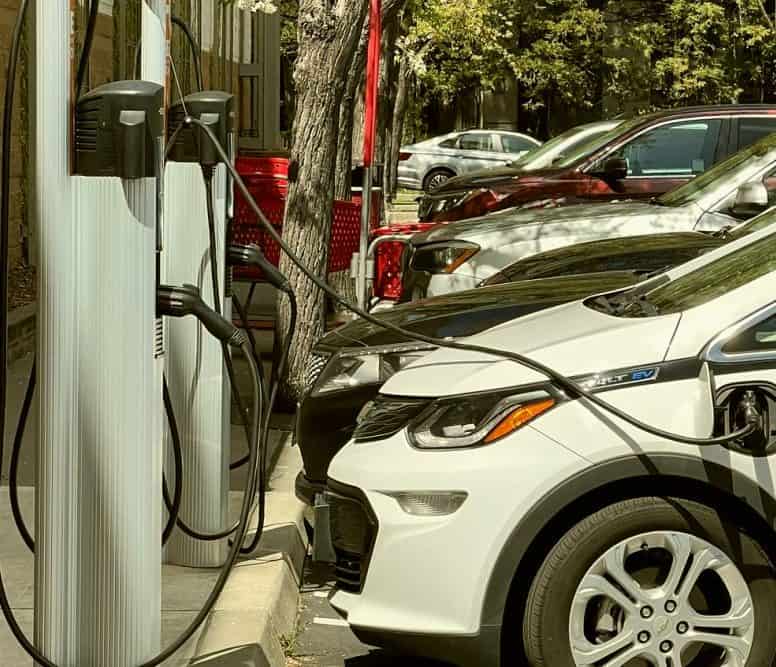
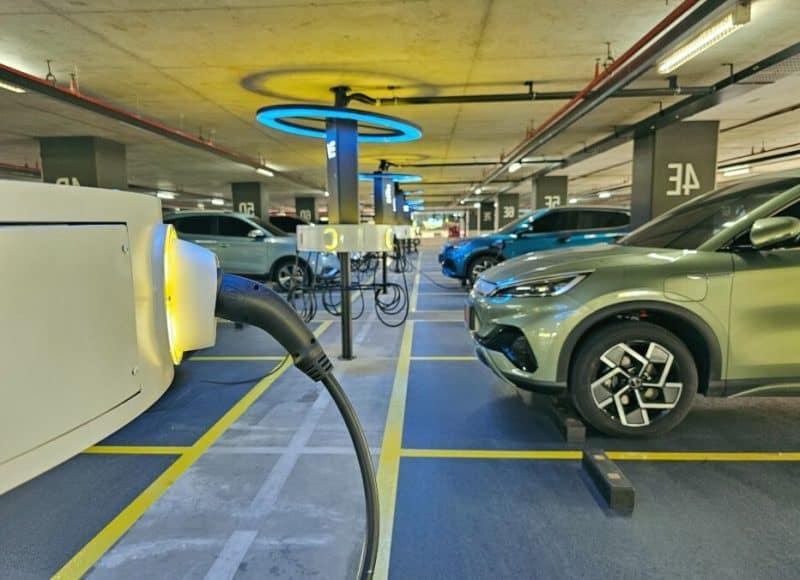
If you drive an EV in central Auckland, the parking buildings are your most reliable bet. Several of the larger CBD car parks – the council-run buildings and some commercial operators – have charging bays on specific levels, usually signposted and marked on the operator’s app.
The catch is that the number of bays in any one building is small. A car park with hundreds of spaces might have a handful of chargers, so they are not something you can count on finding free at peak times. Treat a charge in a CBD building as a bonus on top of the parking, not a guarantee.
The upside is that you are parking under cover in a spot you would probably have used anyway, and the charge tops you up while you are off doing whatever brought you into town.
Auckland Transport Car Parks
Auckland Transport operates a number of car parks and park-and-ride facilities around the region, and EV charging has been rolling out across parts of that network. These bays tend to be aimed at commuters – charge while you are at work or while your car sits at a park-and-ride and you bus into town.
Availability varies a lot by location, and the network keeps changing as more chargers go in, so it is worth checking what is current rather than relying on word of mouth. Auckland Transport publishes information on its EV charging and parking facilities through the official Auckland Transport site.
For a commuter with a predictable routine, an AT car park with a charger can be the quiet backbone of an EV’s charging – slow, steady, and lined up with time the car was going to be parked anyway.
Malls, Supermarkets and Retail Lots
Some of the most useful EV charging in Auckland is attached to places you already stop – the larger shopping malls, a number of supermarket car parks, and various retail destinations have put chargers into their lots. The logic is obvious: you are parked for an hour doing the groceries or browsing, and the car charges while you do.
These bays are often faster chargers than the trickle you get overnight at home, which makes them genuinely useful for a top-up rather than a full fill. Quality and reliability vary by site, and popular ones can be occupied, so do not build a journey around one being free.
The rules in these private lots are set by the operator, not Auckland Transport, which matters when it comes to time limits and what happens if you overstay – more on that below. But as a casual top-up while you shop, they are hard to beat for convenience.
What It Costs to Charge and Park
The Two Fees Stacked Together
Charging in a parking facility usually means paying for two things at once, and it helps to keep them separate in your head. There is the cost of the electricity itself, and there is the cost of the parking space your car occupies while it charges.
In some locations the charging is free and you only pay for parking – common at retail lots wanting to draw you in. In others you pay for the electricity through a charging app and pay for the parking through the car park’s normal system. Occasionally both are rolled together.
Because the arrangements differ site to site and change over time, the honest answer to ‘what does it cost’ is: check the specific location on the day. What you want to avoid is assuming a free charge somewhere and discovering the parking ran a city-fringe hourly rate the whole time.
Paying Through an App
Most public charging in Auckland is handled through a charging network’s app rather than coins or a card on the unit. You plug in, start the session in the app, and pay for what you draw. Different chargers belong to different networks, so you can end up with a couple of apps on your phone depending on where you charge.
Pricing is typically by the kilowatt-hour or by the minute, and it varies between networks and between slow and fast chargers. The app will show you the rate before you start – read it, because fast chargers cost more per unit than slow ones, and the convenience is not always worth it for a short top-up.
The one habit worth forming is checking the rate at the start of every session rather than assuming it matches the last place you charged. The networks price differently, and the difference adds up.
Why Slow Can Be Cheaper
There is a temptation to always reach for the fastest charger available, but for a lot of Auckland parking that is the wrong instinct. If your car is going to sit in a CBD building or an AT car park for several hours anyway, a slow charger doing its quiet work over that time is usually cheaper per unit than a fast charger you do not actually need.
Fast charging earns its higher cost when you are on a tight schedule or genuinely low – a quick blast before a long drive. For the everyday situation of parking while you work or shop, the cheaper slow charge lined up with time you were parking anyway is the smarter play.
The principle is simple: match the charger to how long you are parked, not to how impatient you feel. The parking is the constant; the charge just fills the gap.
The Bay Rules Most Drivers Miss
A Non-EV in a Charging Bay Can Be Ticketed
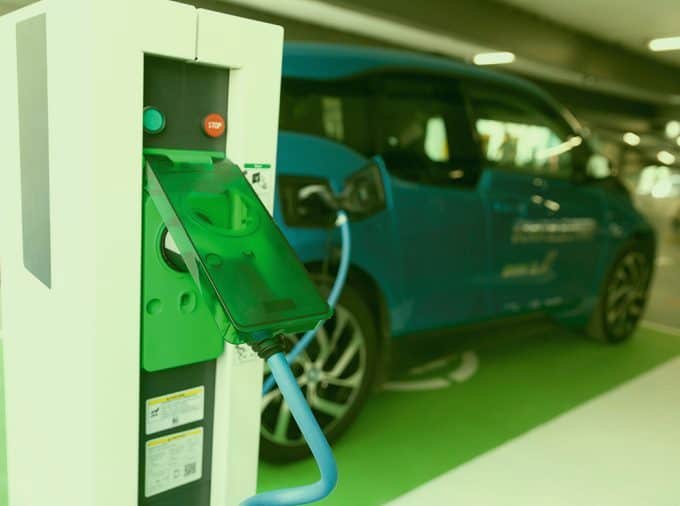
Charging bays are not just ordinary parks with a plug attached. They are designated spaces, and parking a non-electric vehicle in one – the practice some people charmingly call being ‘ICEd’, after internal combustion engines – can attract a ticket where the bay is properly signed and enforced.
The enforcement depends on where you are. In Auckland Transport car parks and on-street charging bays, the restriction can be enforced like any other parking rule. In private retail lots, the operator sets and enforces its own conditions. Either way, the bay is there for charging EVs, and a petrol car parked across it is fair game for a fine.
For EV drivers this is good news – the bays are meant to be available for the cars that need them. For everyone else, the lesson is to read the signs and not treat a charging bay as a convenient extra park.
Overstaying After Your Charge Is Done
Here is the rule that catches considerate EV owners off guard: in some charging bays, you are expected to move on once your car is charged, not leave it sitting there blocking the bay for the next driver. Treating a charger as all-day parking once you are full can attract a penalty where that condition applies.
The reasoning is sound. Charging bays are scarce, and a fully charged car squatting in one all afternoon defeats the point. Some networks even build an idle fee into the app to nudge you along once charging stops.
So plug in, charge, and when it is done, free the bay if the site expects it. Check the signage for the specific conditions, because they vary – but the spirit of the rule is the same everywhere: the bay is for charging, not for parking once the charging is over.
Reading the Signage
Charging bays come with their own signage layered on top of the normal parking rules, and the two can interact in ways that trip people up. A bay might be a charging space and have a time limit and sit within a wider paid zone, all at once.
The safe approach is to read every sign on the post, not just the one with the EV symbol. The charging sign tells you the bay is for EVs; a separate time-limit or payment sign still applies to how long you can stay and what you owe for the space. None of them cancels the others out.
When the signs seem to contradict each other, the strictest one usually governs – assume the tightest restriction applies and you will not go wrong. It is the same discipline that keeps you out of trouble at any Auckland kerb, just with an extra layer for the plug.
Charging Etiquette and Avoiding Trouble
Unplugging Someone Else
Sooner or later you will arrive at the only charger around to find it occupied by a car that finished charging an hour ago. The question of whether you can unplug it is one of the genuine grey areas of EV life, and the answer is mostly about courtesy rather than rules.
The broad etiquette is that unplugging a car that has finished charging is more acceptable than unplugging one still drawing power – never interrupt an active session. Even then, plenty of drivers leave a note rather than touching someone else’s car at all.
It is not a parking rule so much as a social contract among EV drivers, and like all such contracts it works better when everyone is a bit generous about it. The flip side, of course, is not being the person whose finished car is blocking the bay in the first place.
Keeping a Record
If you do end up with a ticket in or around a charging bay – an alleged overstay, a disputed time limit, a bay you believe was wrongly signed – the same advice applies as for any Auckland parking infringement: keep a record.
Photograph the bay, the signage, the charger screen showing your session, and note the date and time. That evidence is what turns a vague ‘but I was charging’ into something you can actually put to Auckland Transport if you decide to query the ticket. Memory alone rarely wins these.
This is a young enough area of enforcement that genuine errors do happen, and a clear photo record is your best protection against one. It costs nothing to take the pictures and it can save you the fine.
When the Dispute Gets Serious
Most charging-bay disagreements are minor and sort themselves out with a polite query and a few photos. But if a fine escalates into a genuine dispute – one you intend to formally challenge, or one where the stakes have grown – that is past the point where a parking website should be your only guide.
This site can explain how Auckland’s parking and infringement process works, but it cannot give you legal advice. For a real dispute, Community Law offers free help, and a lawyer can tell you whether you have a case worth pursuing.
For the everyday business of charging while you park, though, the whole thing stays simple: find the bay, read every sign on the post, charge, and move on when you are done. Do that and the EV side of Auckland parking is genuinely one of the easier parts of owning the car.
The EV charging map across Auckland keeps growing, but the habits that keep you out of trouble do not change much: match the charger to how long you are parked, read every sign on the post, and free the bay when you are done. Get those right and charging stops being a chore and becomes what it should be – something that happens quietly while the car is parked anyway.
3 Comments
Really useful. Do you know if the Civic actually has working chargers at the moment? Last two times I tried they were both taken by 9am.
Good piece but I’d push back a bit on the unplugging etiquette. Even if a car is clearly finished I won’t touch someone else’s cable – too many people get precious about it. I’d rather just go find another bay than start an argument in a car park.
The idle fee thing got me last month at a supermarket charger. Plugged in, did a big shop, came back to find I’d been sitting there fully charged for ages and copped the idle charge. Lesson learnt, I set a phone reminder now like you say.