How Auckland Coupon Parking Zones Work and How to Avoid a Fine
Ask three Auckland drivers what “coupon parking” means and you’ll get three different answers, and at least one of them will be out of date. The paper voucher on the dash is gone, the word has split into two completely different systems, and the time-limit signs that decide whether you get fined are easy to misread. Here’s how the inner-city zones actually work, and what to do if a warden gets to you first.
What “Coupon Parking” Actually Means in 2026
Why the Old Paper Coupons Are Gone
If you learned to park in Auckland a decade ago, “coupon parking” meant a paper voucher you bought from a dairy, scratched the date and time onto, and left face-up on the dash. Those days are over. Auckland Transport retired the paper system in favour of the AT Park app and online account, and the word “coupon” has quietly shifted meaning.
These days, when a sign or a council page says coupon, it almost always means one of two things: a paid on-street zone you now pay for digitally, or a residential coupon that lets a visitor park in a permit-holders’ street. The confusion is real, and it catches people out. Plenty of drivers still go looking for a physical coupon that no longer exists.
So before you worry about getting pinged, it helps to know which kind of zone you’re actually standing in.
Paid Zones vs Residential Coupon Zones
There are two systems wearing the same word, and they behave nothing alike. Paid parking zones are the metered streets across the inner suburbs – Ponsonby Road, parts of Kingsland, Mount Eden village, the City Fringe generally. You pay by the hour, you obey the time limit, and you do it through the app or a pay station.
Residential coupon zones are different. These are streets in busy suburbs where permit holders park free and everyone else can’t, unless they’ve been given a one-day digital coupon by a resident. That’s the system AT runs so a tradesperson or a visiting relative can legitimately park outside someone’s house for a day.
Mixing the two up is where people get into trouble. Paying for an hour on a metered street does nothing for you in a residential permit zone, and a resident’s coupon is worthless on a paid arterial.
How the AT Park App Replaced the Voucher
The practical upshot is that your phone is now the coupon. You start a session when you park, you stop it when you leave, and you only pay for the time you actually used. No more guessing how long your meeting will run and overbuying a two-hour ticket for a forty-minute coffee.
For residents, the same app handles the one-day visitor coupons. A resident activates a coupon against a visitor’s plate for a given date, and that car is then exempt for the day in the permit zone. It can be cancelled if plans change.
It’s genuinely a better system than the paper one once you’ve set it up. The friction is the setup itself – and the fact that nobody explains any of this when you arrive in Auckland from out of town.
Reading the Signs Before You Walk Away
Decoding P60, P120 and the Time Limits
The “P” numbers are the part most people misread. P60 means a sixty-minute maximum stay. P120 means two hours. The number is the limit, not a price and not a guarantee that the parking is free – a P120 sign on a paid street still means you pay, you just can’t stay longer than two hours even if you keep feeding the app.
Where it bites is the maximum stay rule. On a P120 street, leaving and coming back to the same block twenty minutes later can still earn you a ticket, because the limit applies to the zone, not to a fresh payment. Wardens log your plate and your spot.
If you’re parking for a long lunch in Newmarket, read the P number first. It decides everything else.
The Difference Between Paid, Restricted and Free
A sign tells you three separate things, and you need all three before you walk off. First, is it paid or free? Second, what’s the maximum stay? Third, does it only apply during certain hours – most paid zones run roughly 8am to 6pm on weekdays, with different or no charges in the evening and on Sundays.
Free time-restricted parking is the trap that catches the most people. A P30 outside a row of shops in Sandringham might cost nothing, but overstay it and you’ll still be fined. Free doesn’t mean unlimited.
The signage stacks vertically, and the bottom plate often carries the exception that changes the whole picture. Read to the bottom of the post before you trust the top line.
Where the Rules Trip People Up
Suburbs Where Zones Change Block to Block
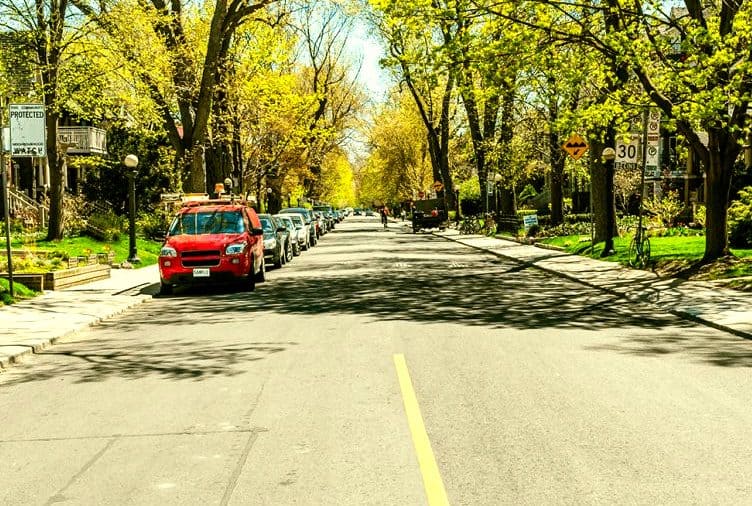
Inner-suburb Auckland is a patchwork, and the rules can flip within a single street. Around Ponsonby and Grey Lynn you can move from a paid P120 stretch into a residents-only permit zone in the space of one intersection, with nothing but the signs to warn you. Kingsland on a match day, the streets around Eden Park, the tighter parts of Mount Eden – all of them shift character depending on exactly which block you stop on.
The city-fringe villages are the worst for it. Parts of Parnell, Newmarket and Mount Eden village run paid zones on the main shopping streets and residential permit zones on the side streets a few metres away.
The lesson is simple and slightly tedious: check the sign at the spot you actually parked in, not the one you remember from the corner you turned at.
Residential Permit Zones and Visitor Coupons
If you’re visiting someone in a permit zone, don’t assume you can just risk it. These zones exist precisely because parking is scarce, and enforcement in them is steady. The legitimate route is for your host to issue you a one-day residential parking coupon against your plate for the day you’re there.
Eligible households get a set allocation of these coupons each year, with extras available for a small fee. From the visitor’s side, you don’t have to do anything except give your host your number plate and the date.
It’s a far better outcome than the alternative – parking three blocks away and walking, or chancing it and finding a ticket under the wiper.
When the App Says One Thing and the Sign Says Another
The app is convenient, but the sign on the post is the legal authority. If the app and the physical signage disagree – a zone code that doesn’t match, a time limit that reads differently – trust the sign and pay accordingly. Signage is what a warden enforces against, and “the app told me” is not a defence that goes anywhere.
This matters most when zones have been recently changed. Auckland Transport updates paid areas and time limits periodically, and the app data and the street signs don’t always sync on the same day.
Take ten seconds to photograph the sign and the bay number when you park somewhere unfamiliar. It costs nothing, and if anything goes sideways later, you’ll be glad you have it.
What to Do If You Get a Ticket Anyway
Checking Whether the Ticket Is Sound
Not every infringement notice is correct. Before you pay, read it against what actually happened. Does the time on the ticket fall inside the hours the paid restriction applied? Was the signage at your spot legible and present, or faded and half-missing? Did you have a live AT Park session that the warden somehow didn’t register?
These are the grounds that genuinely get tickets waived – a process error, missing or unreadable signage, or a payment that did go through. A ticket you simply don’t like is not the same as a ticket that’s wrong, and it’s worth being honest with yourself about which one you’re holding.
If something about it doesn’t add up, gather your evidence: the photo of the sign, your app payment record, the bay number. That’s the material a review actually turns on.
How the AT Dispute Process Works
Auckland Transport runs a formal waiver process for parking infringements, and you can lodge a challenge directly with them before it escalates. You submit your reasons and your evidence, and a reviewer decides whether to waive, reduce or uphold the fine. Be specific and factual – “the P120 sign on the post was obscured by a parked truck and the photo shows it” lands far better than a general complaint about Auckland parking.
There are time limits on lodging a challenge, so don’t sit on it. A notice left in the glovebox for a month is a notice you’ll probably end up paying in full.
If the first review goes against you and you still believe it’s wrong, the matter can proceed to a court hearing – a step up in effort worth weighing carefully.
When to Get Proper Advice
There’s a line where a parking ticket stops being a parking problem and becomes a legal one, and it’s worth knowing where it is. If you’re disputing something into the court process, dealing with multiple notices, or unsure of your actual legal position, this is the point to get real advice rather than guess.
This site can tell you how the system works and how to read a sign. It can’t act as your lawyer, and it won’t pretend to. For free, plain-English help on your rights, Community Law offers guidance that’s built for exactly this kind of everyday situation.
For most tickets you’ll never need to go that far. But knowing the line is there – and where to turn when you reach it – is part of handling your own parking confidently rather than just hoping for the best.
Most of the trouble with Auckland’s coupon and paid zones comes down to two habits: assuming the rules are the same as the last block, and trusting the app over the sign. Get those two right and you’ll spend a lot less time peeling notices off your windscreen. The system isn’t designed to catch you out – it just never bothered to explain itself.
4 Comments
The P120 thing got me on Teed Street in Newmarket last year. Moved the car around the corner thinking I was clear and still copped a ticket. Had no idea the limit was for the whole zone, not the spot. Wish someone had told me that earlier.
Solid advice about photographing the sign. I got a ticket waived in Ponsonby because the pole sign was completely faded and I had a photo. They folded straight away once I sent it through. Worth the ten seconds every time.
Good explainer. The residential coupon part is worth shouting louder about – my mum lives off Richmond Road and half her visitors had no clue she could just issue them a coupon for the day. Took us ages to figure that out.
Does the app session carry over if you move to a different paid street, or do you have to stop and start a new one? Never been sure about that bit.